AmericanCharacter
 |
Each unit within the potential course, "American Character", will be directed by an inquiry question that will attempt to focus attention on a core search for understanding. These questions are presented as examples that can be altered and reestablished along the interest and expertise lines suggested by educators and students.
Each unit will also have a set of Content Questions (Essential Questions) that relate directly to the subject area standards.
Unit 1: Systems Within Systems
The natural sub-systems upon which the people of the United States rely are connected to global systems of climate, continental drift, environmental stress, population, refugee and settlement patterns, spatial patterns of food production and distribution, and land use. The human systems that the United States relies on also depend on global connections and relationships of economic and political institutions, together with patterns of human mobility, land use, health, race, class, and gender. Our survival and wellness depend on how well we understand and integrate the natural and human systems.
Unit question:
What unique, as well as general, patterns of environmental and cultural interactions have evolved that help define the natural landscape and character of the people of the United States? Unit Curriculum Map:
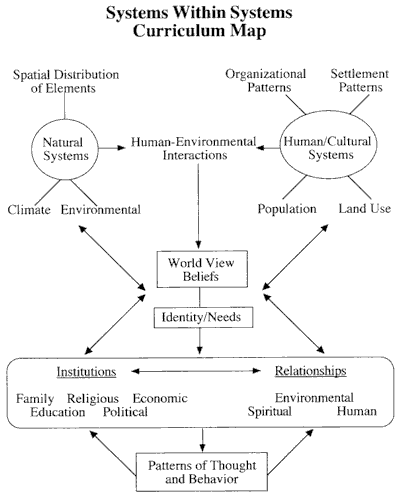
The following curriculum map outlines the targeted understandings (concepts in relationship) that Unit I will address. It represents a system, and as such demonstrates knowledge connections within and across discipline fields. All subject areas can contribute to the overall implementation of the unit's goal...the understanding that identity is a function of the intersection of culture and nature, and that responsible behavior grows out of a common identity. As this identity changes, so do needs and the fundamental ways in which people interact with the environment and society. This, of course, changes their identity.
People live at the intersection of nature and culture. Nature includes the aspects of climate, spatial distribution of elements, and so forth. Culture attends to other systems of demographics, institutions, and patterns of behavior. As nature and culture meet, they define in people a world view, a set of needs, and an identity. These needs are met, and this identity is sustained, through the creation of institutions. These institutions both protect and victimize people. As these contradictions are identified and struggled with, changes of world view result that, in turn, change institutions, needs, identity, culture, and the environment as well.